Steps to take after an accident before filing an insurance claim
An accident happens in seconds. What you do in the minutes and hours that follow, however, can affect your claim for months. Many California drivers and small business owners either do too little at the scene — failing to gather critical evidence — or do too much, making statements that complicate their case later. The right sequence of steps protects both your physical safety and your financial recovery.
This guide walks you through exactly what to do after an accident, before you ever pick up the phone to file a claim.
Step 1: make sure everyone is safe first
Before anything else, check for injuries. If anyone is hurt, call 911 immediately. Don’t attempt to move injured people unless there is an immediate danger — like fire or traffic risk — since moving someone with a spinal injury can make it worse.
If the accident is minor and vehicles are drivable, move them to the shoulder or a nearby parking lot to avoid blocking traffic. Turn on your hazard lights. In California, failing to move your vehicle on a freeway after a minor collision can result in a citation and creates additional safety risks for everyone involved.
Your instinct might be to fix the situation quickly and move on. Resist it. The steps you take right now determine whether your claim is smooth or contested.
Step 2: call the police — even for minor accidents
In California, you’re legally required to report any accident involving injury, death, or property damage exceeding $1,000 to the California Department of Motor Vehicles within 10 days using Form SR-1. For accidents involving injury or death, law enforcement must also be notified at the scene.
Even when the damage looks minor and both drivers seem agreeable, call the police. An official police report creates an objective, third-party account of what happened. Without it, the other driver can change their story later — and often do. Insurance adjusters rely heavily on police reports when determining fault.
Example: After a low-speed collision in a San Diego parking lot, Carlos and the other driver agreed to “handle it privately.” The other driver later claimed whiplash and filed a claim alleging the accident was far more serious. Without a police report, Carlos had no documented record of the scene, vehicle positions, or the other driver’s initial demeanor. His insurer had to settle a claim that a police report could have refuted.
Step 3: document everything at the scene
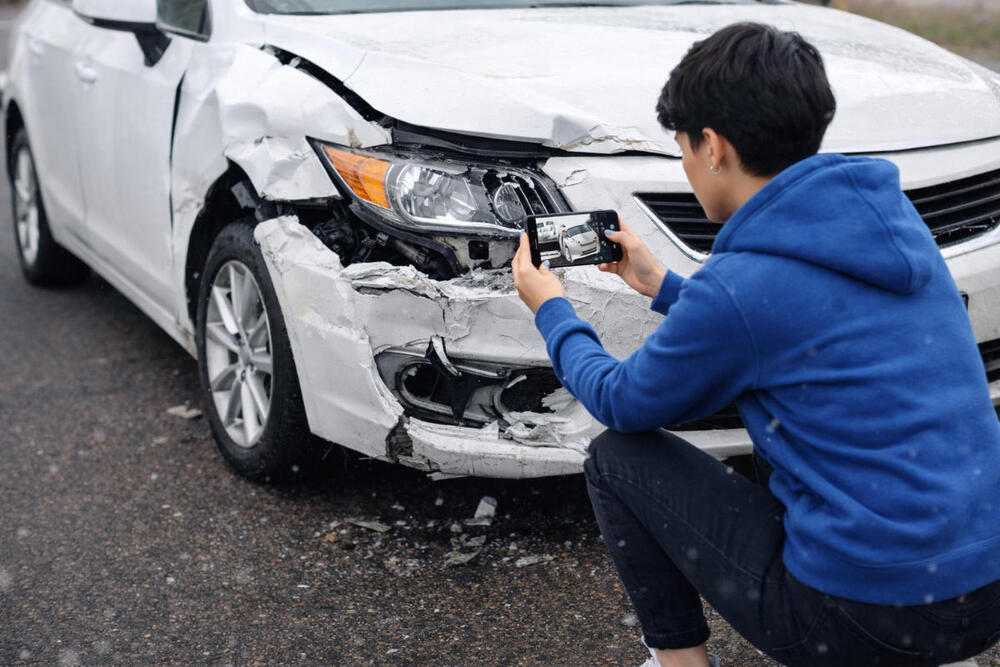
Once it’s safe and the police have been called, begin documenting. Pull out your phone and photograph:
- All vehicles involved, from multiple angles, showing the full vehicle and close-ups of damage
- The surrounding scene: road conditions, traffic signs, skid marks, weather
- Any visible injuries (with permission where relevant)
- License plates of all vehicles
- The other driver’s license, registration, and insurance card
Then write down — or record a voice memo — your account of what happened while it’s fresh. Note the time, direction you were traveling, approximate speed, what the other driver did, and anything witnesses said.
Collect contact information from any witnesses. In a busy California city, bystanders move on quickly. Get a name and phone number before they leave — a neutral witness account can be the difference between a disputed claim and a straightforward one.
Step 4: exchange information — but watch what you say
Exchange the following with every driver involved: full name, phone number, driver’s license number, license plate, vehicle make and model, insurance company name, and policy number.
Here’s what many people get wrong at this stage: they apologize. It’s a natural human response, but in the context of an insurance claim, “I’m so sorry” can be interpreted as an admission of fault. California follows a comparative fault system, meaning fault — and financial responsibility — can be split between multiple parties. Anything you say at the scene can and will be used to assign that percentage.
Be factual and cooperative. Describe what happened to the police officer. Don’t speculate about fault, don’t minimize your injuries (“I’m fine”), and don’t make promises about how costs will be handled.
Step 5: seek medical attention promptly
Even if you feel fine, see a doctor within 24–48 hours. Many injuries — whiplash, soft tissue damage, concussions — don’t produce obvious symptoms immediately. Adrenaline masks pain in the immediate aftermath of an accident.
From a claim standpoint, delayed medical treatment creates a gap that insurers use to argue your injuries weren’t caused by the accident. California insurers look at the timeline between the accident and first medical contact. A gap of several days gives them grounds to dispute the connection.
Keep copies of all medical records, bills, and any communications with healthcare providers related to the accident.
Step 6: notify your insurer promptly — but don’t file immediately
Most California auto insurance policies require you to report accidents “promptly” or within a “reasonable time,” even if you weren’t at fault and even if you’re not planning to file under your own policy. Failing to report can jeopardize your coverage.
Reporting and filing are two different things. Reporting tells your insurer an accident occurred. Filing initiates the claims process. Before you file, you want to have:
- The police report number (and the full report once available)
- All photos and documentation from the scene
- A clear picture of your medical situation
- A reasonable estimate of vehicle damage
Rushing to file before you have this documentation can result in a settlement that doesn’t fully cover your losses — especially if injuries or vehicle damage turn out to be more serious than they first appeared.
For more on how the claims process works and what mistakes to avoid, see Top 5 Mistakes Small Business Owners Make When Choosing Insurance and The most common insurance claims and how to avoid them on the Kavana blog — many of the same principles apply to personal auto claims.
Step 7: keep a running record after the scene
Your documentation job doesn’t end when you leave the accident scene. In the days and weeks following, keep a file — physical or digital — that includes:
- All medical bills, prescriptions, and treatment records
- Receipts for any out-of-pocket costs related to the accident (rental car, towing, over-the-counter medications)
- Records of time missed from work and corresponding lost income
- Notes on how your injuries are affecting daily life (relevant if a pain and suffering component is part of your claim)
- All correspondence with insurance companies
California has a two-year statute of limitations for personal injury claims from auto accidents. That sounds like a long time, but thorough documentation from day one makes the entire process faster and cleaner — whether your claim settles in weeks or takes longer.
What happens when you’re not at fault but the other driver is uninsured
California has one of the highest rates of uninsured drivers in the country — estimated above 16%. If the at-fault driver has no insurance, your options depend on your own coverage. Uninsured motorist coverage pays for your injuries and, in some cases, vehicle damage when the at-fault party can’t. This is a key reason why carrying more than the state minimum matters. For a breakdown of how different coverage types work together, see our guide on the difference between liability, collision, and comprehensive coverage.
How Kavana Insurance supports you through the process
Filing a claim is stressful — but having the right insurer and coverage in place before an accident makes every step easier. Kavana Insurance has over 20 years of experience helping California drivers structure coverage that actually performs when they need it. With access to hundreds of carriers, they tailor policies to your driving patterns, vehicle, and risk profile — so you’re not underinsured when it counts.
If you’re unsure whether your current coverage would protect you after a serious accident, now is the time to find out — not after the fact.
Get your free insurance quote and make sure you’re covered before the unexpected happens.
Related Reading
- The most common insurance claims (and how to avoid them)
- The difference between liability, collision, and comprehensive coverage
Get a Quote
Ready to see how your coverage compares? Get a fast, no-obligation quote from a licensed California and Texas broker. Get a Quote →
Related Articles

How much does home insurance cost in California in 2026?
If you’re shopping for or renewing home insurance in California this year, you’ve probably noticed the ground shifting under you. This article gives you the real 2026 price…

The difference between liability, collision, and comprehensive coverage
Buying car insurance in California feels simple – until you’re staring at a quote with three different coverage types and no clear idea what each one actually does.…

Insurance 101: understanding the basics before you buy
Buying insurance can feel like learning a foreign language. Premiums, deductibles, coverage limits, exclusions, endorsements – the terminology alone is enough to make your head spin. Add in…