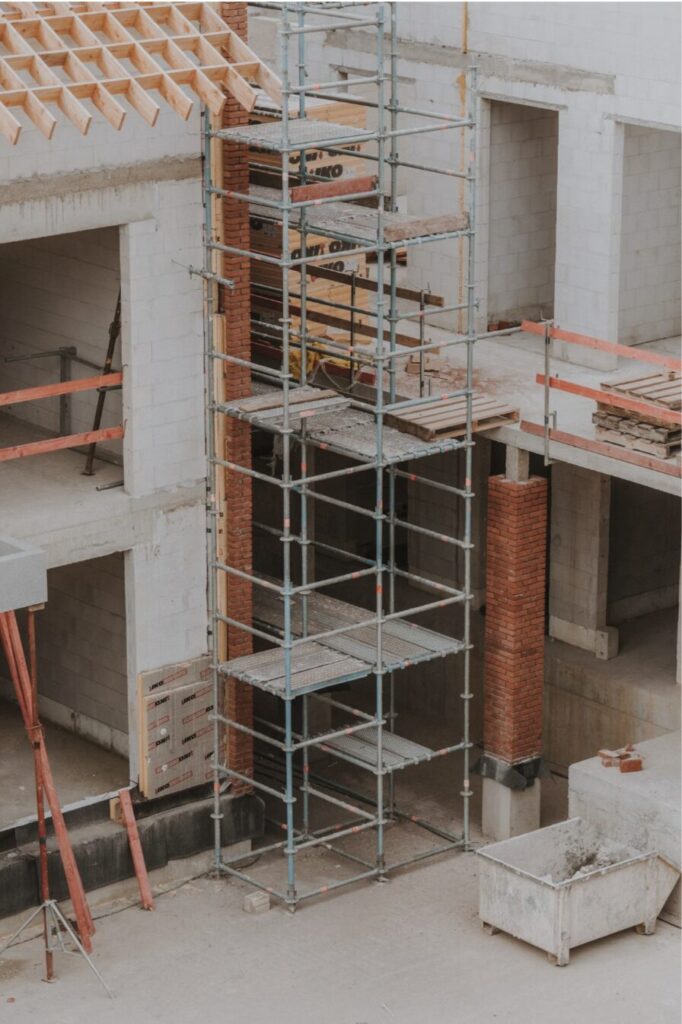
Insuring a Home Remodel and New ADU Without Leaving the Existing House Exposed
Case study details have been modified to preserve confidentiality while retaining the underlying insurance and risk management lessons.
California’s ADU boom has created an increasingly common insurance problem:
What happens when an owner substantially remodels an existing home while simultaneously constructing an ADU?
A recent Northern California project reviewed by Kavana provides a good example.
The Project
The property involved an existing residence undergoing approximately $600,000 of renovation work, together with construction of an approximately 600-square-foot ADU.
Before construction, the existing residence had been insured for approximately $750,000.
That immediately creates an important question:
Should the builders risk policy be written for $600,000—or something closer to $1.35 million?
The answer depends on how the carrier treats the existing structure.
The Existing House Doesn’t Disappear During Construction
This sounds obvious, but it is one of the most important concepts in renovation insurance.
Suppose an owner has:
- $750,000 existing structure
- $600,000 renovation/ADU project
The contractor’s $600,000 budget doesn’t represent everything that can burn down.
During construction, the existing $750,000 building is still sitting there.
In fact, renovation can increase its exposure to loss because construction introduces additional ignition sources, open walls, temporary electrical work, contractors and changing weather protection.
Existing Structure Coverage Is Critical
Builders risk policies aren’t standardized.
One carrier might contemplate the existing structure within the total completed value.
Another may require it to be specifically scheduled.
Another may exclude existing property entirely.
That means two builders risk quotes displaying similar limits can provide materially different protection.
Before comparing premiums, determine:
Is the existing building actually covered?
If the answer isn’t clear, the quote isn’t ready to compare.
The ADU Creates Another Layer
An ADU can be:
- attached to the existing residence;
- incorporated through an addition;
- converted from existing space; or
- constructed as a standalone building.
Underwriters need to know which.
A detached ADU creates different construction and property considerations than an addition tied directly into the existing house.
The application should clearly describe the ADU rather than simply calling the entire project a “remodel.”
Why the Original Homeowners Limit Matters
The existing homeowners policy showed approximately $750,000 of dwelling coverage.
That doesn’t automatically prove the replacement cost is exactly $750,000.
But it is an important data point.
If an application suddenly proposes an existing structure value dramatically below the amount previously insured, an underwriter is likely to ask why.
And they should.
The objective isn’t to reproduce the old homeowners limit automatically. It’s to establish a reasonable current replacement cost for the structure actually at risk.
Kavana’s Recommendation
For a remodel-plus-ADU project, break the exposure into separate components before approaching the market:
| Exposure | Example |
|---|---|
| Existing structure | $750,000 |
| Renovation + ADU | $600,000 |
| Total property exposure | $1,350,000 |
| Soft costs | Add if applicable |
| Ordinance & Law | Evaluate separately |
The exact insured value ultimately depends on policy wording and the carrier’s valuation methodology, but this framework prevents the construction budget from being mistaken for the entire exposure.
Questions Owners Should Ask
Before binding builders risk on an ADU renovation:
- Is my existing house covered?
- What replacement value is assigned to it?
- Is the ADU attached or detached for policy purposes?
- Are materials stored off-site covered?
- Is property in transit covered?
- Are soft costs included?
- What Ordinance & Law protection applies?
- What happens to coverage as construction progresses?
The KCRI Takeaway
The biggest builders risk mistake on a renovation isn’t necessarily buying too little total insurance.
It’s insuring the wrong thing.
A $600,000 builders risk limit might sound perfectly reasonable for a $600,000 project.
But if there’s also a $750,000 house standing in the middle of the construction site, the real question is what happens to that $750,000 asset after a catastrophic loss.
Always answer that question before binding.
Talk to Us
Remodeling a home while adding an ADU? We’re happy to help you break the exposure into the right pieces before you go to market — no pressure, just a straight answer on what would actually make sense. Contact Kavana Insurance →
Related Articles
How Much Builders Risk Coverage Does a Major Remodel Actually Need?
A $700K remodel budget doesn't always mean $700K of exposure. Here's how to size builders risk coverage correctly for a major renovation.

Why You Can’t Just Lower the Existing Structure Value on a Builders Risk Policy
A $700K existing structure request to drop to $100K got declined mid-term. Here's why builders risk valuation isn't just a number you can change.

Workers’ Comp Market Outlook: Why California and Texas Are Moving in Opposite Directions (2026)
In most of the country, workers’ compensation rates are falling. Employers in California are seeing the opposite. Understanding why matters for any business running payroll in both states.…